Women’s Writing in the British Isles from the Beginnings to the Present
Harriet Martineau
-
Standard Name: Martineau, Harriet
Birth Name: Harriet Martineau
Pseudonym: Discipulus
Pseudonym: A Lady
Pseudonym: H. M.
Pseudonym: From the Mountain
Pseudonym: An Invalid
Pseudonym: An Englishwoman
HM
began her career as a professional writer, which spanned more than four decades in the mid nineteenth century, with writing from a Unitarian perspective on religious matters. She made her name with her multi-volume series (initially twenty-five volumes, followed by further series) of narrative expositions of political economy. One of the founders of sociology, who believed that social affairs proceed according to great general laws, no less than natural phenomena,
she produced several major contributions to this emerging field. She wrote broadly in periodicals and regularly for a newspaper on social and political issues, and produced three books of observations emerging from her foreign travels. Although her two three-volume novels were not particularly successful, her work had a great impact on later Victorian fiction. She also wrote history, biography, and household manuals. Her advocacy of mesmerism and her atheism made some of her later writings controversial. In her eminently readable autobiography and other writings she presents a cogent analysis of conditions shaping the lives of Victorian women. Although she became hugely influential—one of the most prominent women writers of her day—HM
eschewed notions of genius. Her crucial contribution to Victorian feminist thought has frequently been overlooked.
Chapman, Maria Weston, and Harriet Martineau. “Memorials of Harriet Martineau”. Harriet Martineau’s Autobiography, James R. Osgood, 1877, pp. 2: 131 - 596.
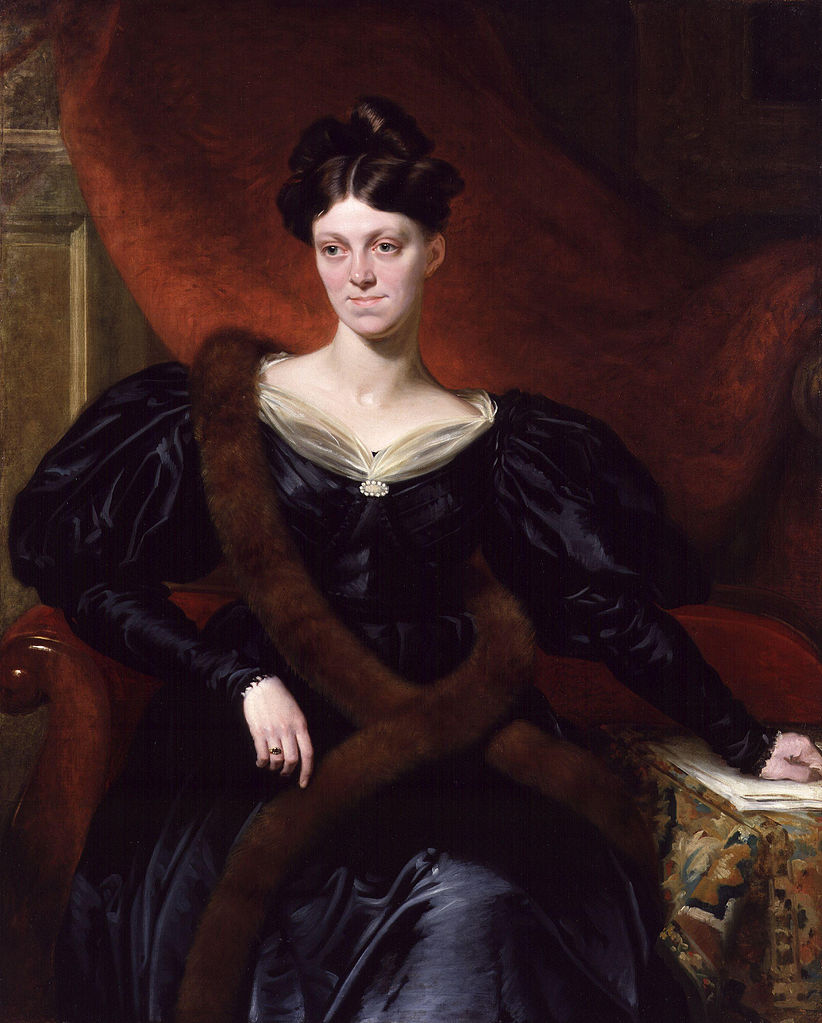
"Harriet Martineau" Retrieved from https://upload.wikimedia.org/wikipedia/commons/thumb/9/9a/Harriet_Martineau_by_Richard_Evans.jpg/822px-Harriet_Martineau_by_Richard_Evans.jpg.
As her father
established himself socially and politically within the Dalston community, she became involved in London's literary and intellectual circles. Among those she met, William James Linton
, John Stuart Mill
, and...
Friends, Associates
George Eliot
In addition to his intellectual heterodoxy, Charles Bray was a sexual nonconformist. He had several illegitimate children, of whom he and his wife adopted at least one. GE
may or may not have known about...
Friends, Associates
Sophia Jex-Blake
After the riot, the women received support from several notable people, including Frances Power Cobbe
and Harriet Martineau
. Martineau supported SJB
into the future as well: she sent her a small monetary contribution aimed...
Her father's wide social connections brought the children into contact with many distinguished families, such as the Taylors, Meadows, and Martineaus (of whom the future writer and political economist Harriet
was a little older than...
At the beginning of February GE
had already been hoping that her friendship with Parkes (a dear, ardent, honest creature) would be close.
qtd. in
Ashton, Rosemary. George Eliot: A Life. Hamish Hamilton, 1996.
95
A couple of years later Parkes went against her...
Friends, Associates
Jessie Boucherett
Partly through her membership of the Kensington Society
(a social and political discussion group of about fifty women inaugurated in 1865), JB
broadened her acquaintance with significant members of the feminist movement, including Frances Power Cobbe
Friends, Associates
Caroline Clive
CC
remained a close friend of her early passion Catherine Gore
.
qtd. in
Blain, Virginia et al., editors. The Feminist Companion to Literature in English: Women Writers from the Middle Ages to the Present. Yale University Press; Batsford, 1990.
She was also acquainted with Mary Russell Mitford
, whom she described as priggy,
Blain, Virginia et al., editors. The Feminist Companion to Literature in English: Women Writers from the Middle Ages to the Present. Yale University Press; Batsford, 1990.
and Harriet Martineau
Friends, Associates
Annie Keary
For years AK
's dearest wish was to become a friend of Harriet Martineau
, whose writing she immensely admired. Later, however, she began to feel there was something in Martineau's character or imagination that...
Friends, Associates
Fredrika Bremer
FB's lifelong friendship with Per Böklin
survived her refusal of his hand and his marriage to someone else. The influence he had on her thinking was shared by Stina, Countess Sommerhielm
, and the academic...
Friends, Associates
Caroline Norton
Before her marriage CN
had formed a friendship with the Irish poet Tom Moore
, once a crony of her famous grandfather; this friendship endured into her middle age. It was also as Richard Brinsley...
Little is known of any literary contacts of MAK
. She met and became a friend of Barbara Hofland
, and in the early 1830s she sought [the] acquaintance by letter of Harriet Martineau
...
Health
Augusta Ada Byron
Intermittently from 1840 onwards, AAB
was subject to what she termed no end of manias and whims.
qtd. in
Woolley, Benjamin. The Bride of Science: Romance, Reason and Byron’s Daughter. Macmillan, 1999.
218
Deciding to use her illness as a grounds for scientific exploration and inspired by Harriet Martineau
's...
Timeline
No timeline events available.
Texts
Comte, Auguste. The Positive Philosophy of Auguste Comte. Translator Martineau, Harriet, John Chapman, 1853, 2 vols.
Comte, Auguste. The Positive Philosophy of Auguste Comte. Translator Martineau, Harriet, Peter Eckler, 1893.
Martineau, Harriet. The Tendency of Strikes and Sticks to Produce Low Wages. J. H. Veitch, 1834.
Martineau, Harriet. Traditions of Palestine. Longman, Rees, Orme, Brown and Green, 1830.
Martineau, Harriet. Weal and Woe in Garveloch. Charles Fox, 1832.
Martineau, Harriet. Women, Emancipation and Literature: The Papers of Harriet Martineau 1802-1876. Adam Matthew, 1991, 17 microfilm reels.