Women’s Writing in the British Isles from the Beginnings to the Present
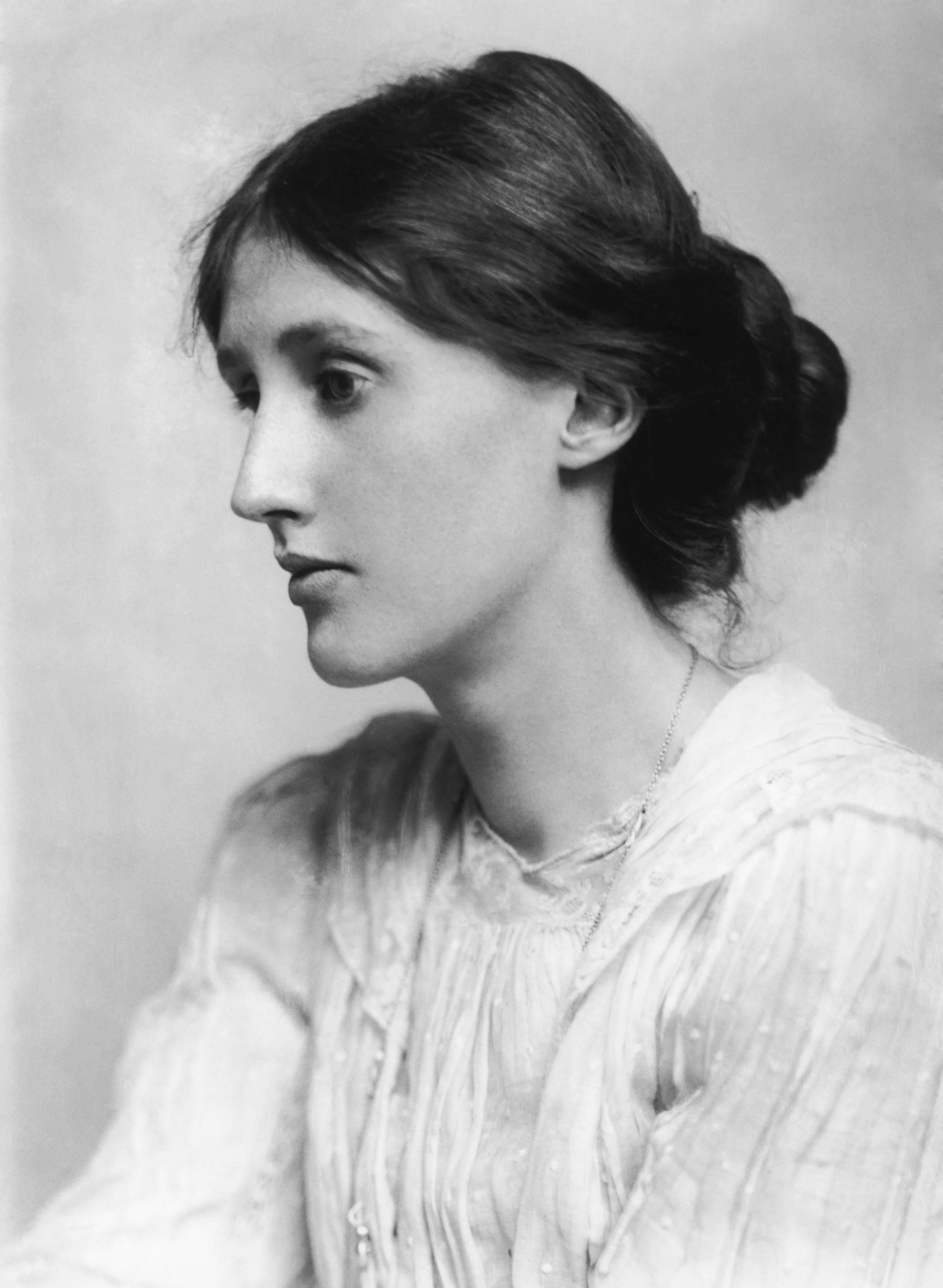
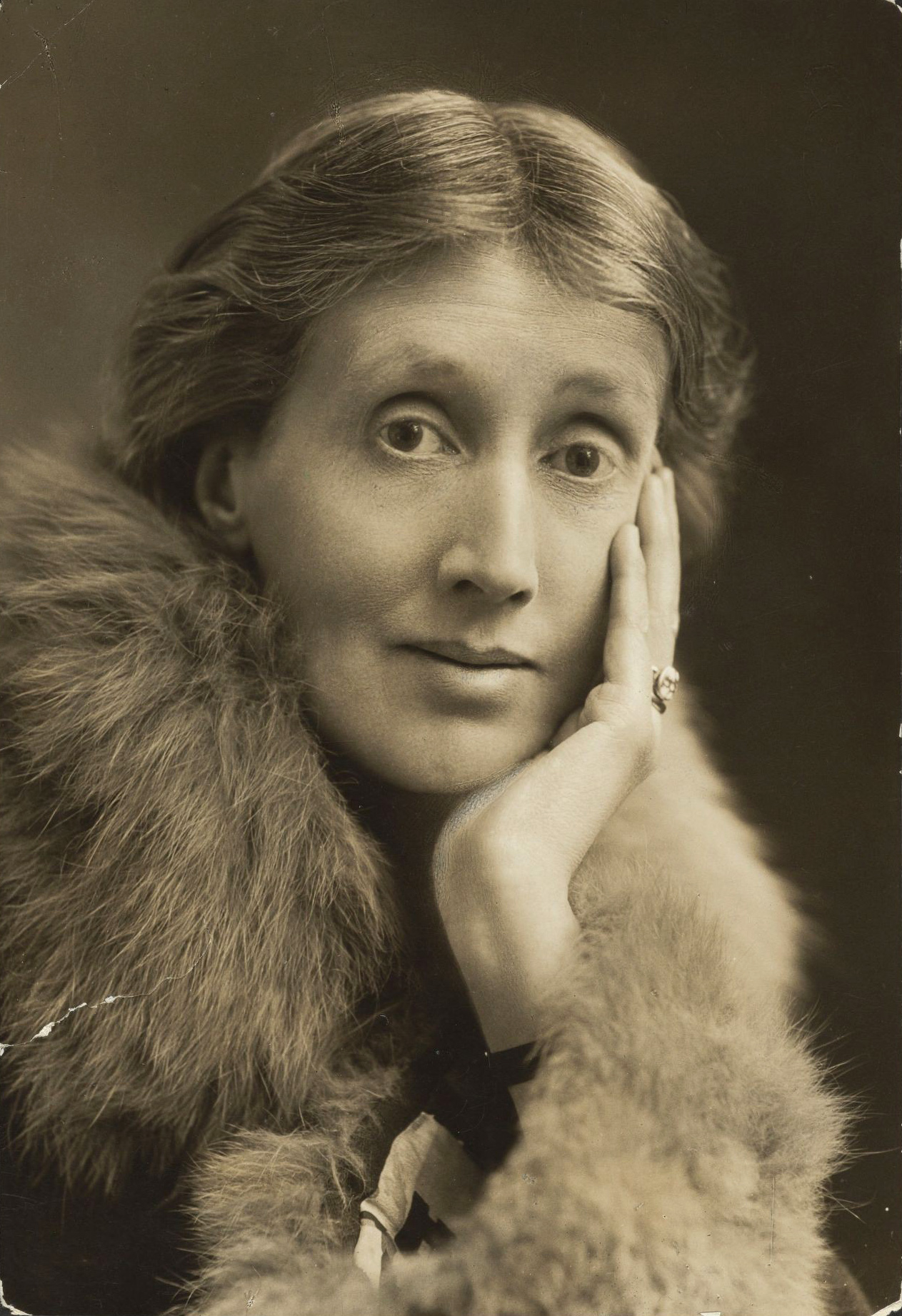
Virginia Woolf
-
Standard Name: Woolf, Virginia
Birth Name: Adeline Virginia Stephen
Nickname: Ginia
Married Name: Adeline Virginia Woolf
Thousands of readers over three or four generations have known that Virginia Woolf was—by a beadle—denied access to the library of a great university. They may have known, too, that she was a leading intellect of the twentieth century. If they are feminist readers they will know that she thought . . . back through her mothers and also sideways through her sisters and that she contributed more than any other in the twentieth century to the recovery of women's writing.
Marcus, Jane. “Introduction”. New Feminist Essays on Virginia Woolf, edited by Jane Marcus, Macmillan, 1981, p. i - xx.
xiv
Educated in her father's library and in a far more than usually demanding school of life, she radically altered the course not only of the English tradition but also of the several traditions of literature in English.
Froula, Christine. Virginia Woolf and the Bloomsbury Avant-Garde. Columbia University Press, 2005.
2
She wrote prodigiously—nine published novels, as well as stories, essays (including two crucial books on feminism, its relation to education and to war), diaries, letters, biographies (both serious and burlesque), and criticism. As a literary journalist in a wide range of forums, she addressed the major social issues of her time in more than a million words.
Woolf, Virginia. “Introduction; Editorial Note”. The Essays of Virginia Woolf, edited by Andrew McNeillie, Hogarth Press, 1986–1994, pp. vols. 1 - 4: various pages.
ix
She left a richly documented life in words, inventing a modern fiction, theorising modernity, writing the woman into the picture. She built this outstandingly influential work, which has had its impact on both writing and life, on her personal experience, and her fictions emerge to a striking degree from her life, her gender, and her moment in history. In a sketch of her career written to Ethel Smyth
she said that a short story called An Unwritten Novelwas the great discovery . . . . That—again in one second—showed me how I could embody all my deposit of experience in a shape that fitted it.
Woolf, Virginia. The Letters of Virginia Woolf. Editors Nicolson, Nigel and Joanne Trautmann, Hogarth Press, 1975–1980, 6 vols.
Beauman, Nicola. The Other Elizabeth Taylor. Persephone Books, 2009.
214-15
ET
herself felt that it expanded her range, but that the result was not successful: that she had produced a cold...
Literary responses
Vita Sackville-West
Woolf
(who claimed that Seducers in Ecuador was the sort of thing I should like to write myself) praised the beauty and fantasticallity [sic] of the details, though she also felt that it...
Literary responses
Rose Allatini
Meanwhile the Times Literary Supplement saw the novel as well-written—evidently the work of a woman. The reviewer judged that as a frank and sympathetic study of certain types of mind and character, it is of...
Literary responses
Elizabeth Robins
The young Virginia Stephen
(usually a reviewer hard to please) praised this book warmly: few living novelists are so genuinely gifted as Miss Robins, or can produce work to match hers for strength and sincerity...
Literary responses
Stella Gibbons
As a result of this publication, Virginia Woolf
invited SG
to submit some poems to the Hogarth Press
, but nothing came of the proposal.
Oliver, Reggie. Out of the Woodshed: A Portrait of Stella Gibbons. Bloomsbury, 1998.
50
Literary responses
Enid Bagnold
Not surprisingly, the article came under attack from many directions. Dame Ethel Smyth
responded in the next issue of the Sunday Times: It surprises me that so brilliant an intelligence should not remember that...
Literary responses
Jane Welsh Carlyle
Virginia Woolf
declared in Geraldine
and Jane (in The Second Common Reader) that JWC
's letters owe their incomparable brilliancy to the hawk-like swoop and descent of her mind upon facts.
Woolf, Virginia, and Virginia Woolf. “Geraldine and Jane”. The Second Common Reader, Hogarth Press, 1932, pp. 186-01.
198
Literary responses
E. H. Young
Mary Ross
found in this novel a quality of humanism and the play of an intelligence which understands and accepts the emotions.
qtd. in
Mezei, Kathy, and Chiara Briganti. “’She must be a very good novelist’: Rereading E. H. Young (1880-1949)”. English Studies in Canada, Vol.
27
, No. 3, Sept. 2001, pp. 303-31.
313
Ironically, while The Spectator reviewer attributed to EHYtoo studious an acquaintanceship...
Literary responses
Ethel Smyth
Woolf
responded to this book with the comment that her own chief glory was that I, Virginia, kept Ethel at it.
Woolf, Virginia. The Letters of Virginia Woolf. Editors Nicolson, Nigel and Joanne Trautmann, Hogarth Press, 1975–1980, 6 vols.
6: 376
Literary responses
Mary Agnes Hamilton
Virginia Woolf
read this novel soon after its publication, with fascinated disapproval. She felt that MAH
had energy and ability, and the wits to construct the method of telling a story, but that she had...
Literary responses
Viola Meynell
Writing in the Times Literary Supplement, Virginia Woolf
judged that this novel, lacking realism, is but an intricate pattern . . . hidden in a secluded place where the sun, falling through greenish panes...
Literary responses
A. E. Housman
At AEH
's death Virginia Woolf
wrote that although she had personal reservations about his muse—Always too laden with a peculiar scent for my taste. May, death, lads, Shropshire—
Woolf, Virginia. The Letters of Virginia Woolf. Editors Nicolson, Nigel and Joanne Trautmann, Hogarth Press, 1975–1980, 6 vols.
6: 33
he had...
Literary responses
Mary Russell Mitford
John Kenyon
wrote in 1833 to tell MRM
of the delight taken by himself and his brother in her tolerant and humanizing pen.
qtd. in
Mitford, Mary Russell. The Life of Mary Russell Mitford: Told by Herself in Letters To Her Friends. Editor L’Estrange, Alfred Guy Kingham, Harper and Brothers, 1870, 2 vols.
2: 145
Her reputation as a financially successful author brought her unwelcome...
Literary responses
Vera Brittain
The book was widely and favourably reviewed. Lady Rhondda
found it [e]xtraordinarily interesting. I sat up reading it till long past my usual bedtime and have been reading it again all this morning.
qtd. in
Gorham, Deborah. Vera Brittain: A Feminist Life. Blackwell, 1996.
1
Virginia Woolf
Literary responses
Ethel Wilson
Feminist responses to EW
's work emerged in the 1970s. Maggie Lloyd Vardoe's decision to leave a loveless marriage and independently pursue a more fulfilling one was lauded as radical for its time. In the...